Homeowners looking to improve energy efficiency often hear the terms weatherization and insulation used interchangeably. While both play an important role in reducing energy loss, they are not the same. Understanding the difference between weatherization services and insulation can help homeowners make smarter decisions about improving comfort, lowering energy bills, and protecting their homes long term.
In Arvada, where homes experience cold winters and warm summers, choosing the right efficiency solution can make a noticeable difference in both comfort and utility costs. A weatherization service Arvada focuses on improving the overall performance of a home, while insulation targets one specific aspect of energy efficiency. Knowing how they work together—and how they differ—can help homeowners get the best results.
What Weatherization Services Really Mean
Weatherization is a whole-home approach to energy efficiency. Instead of focusing on a single material or area, weatherization addresses how air, heat, and moisture move throughout a home. The goal is to reduce energy waste by strengthening the building envelope and improving how the home responds to outdoor conditions.
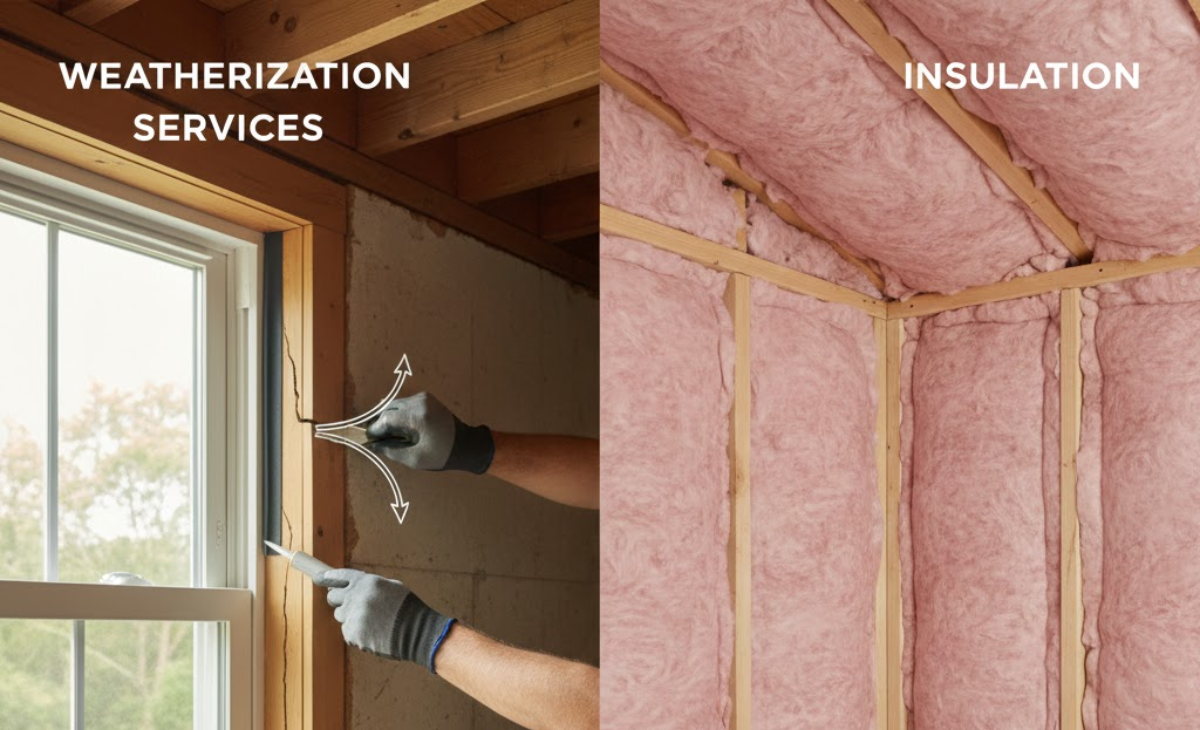
A professional weatherization service Arvada begins with an evaluation of the home. This includes identifying air leaks, insulation gaps, moisture issues, and areas where energy is being lost. Based on these findings, improvements are made to seal, insulate, and optimize the home for better performance year-round.
Weatherization is not limited to one upgrade. It combines multiple improvements into a coordinated strategy designed to maximize energy savings and indoor comfort.
What Insulation Does and What It Doesn’t
Insulation focuses on slowing heat transfer between indoor and outdoor spaces. It acts as a thermal barrier that helps keep warm air inside during winter and hot air out during summer. Insulation is commonly installed in attics, walls, crawl spaces, and floors.
While insulation is a critical component of energy efficiency, it does not stop air movement on its own. Even well-insulated homes can experience drafts and energy loss if air leaks are not properly sealed. Insulation works best when paired with air sealing and other weatherization measures.
Insulation improves thermal resistance, but it does not address airflow, moisture intrusion, or ventilation balance—areas where weatherization plays a much larger role.
The Core Difference Between Weatherization and Insulation
The main difference lies in scope. Insulation is one specific improvement, while weatherization is a comprehensive system.
Weatherization looks at how the entire home functions as a unit. It addresses air leakage, insulation performance, moisture control, and ventilation. Insulation focuses solely on reducing heat transfer in specific areas.
Think of insulation as a single tool, while weatherization is the full toolbox. Each serves a purpose, but weatherization delivers broader and longer-lasting results by addressing multiple sources of energy loss at once.
How Air Sealing Sets Weatherization Apart
One of the biggest differences between weatherization and insulation is air sealing. Air leaks around windows, doors, attics, basements, and wall penetrations allow conditioned air to escape and outdoor air to enter. This makes heating and cooling systems work harder than necessary.
Weatherization prioritizes air sealing to close these gaps. Once air movement is controlled, insulation becomes far more effective. Without air sealing, insulation alone may not deliver the energy savings homeowners expect.
This is why a weatherization service Arvada often provides better overall results than insulation upgrades alone.
Energy Savings: Which Option Delivers More?
Insulation can reduce energy bills, especially if a home is under-insulated. However, weatherization typically delivers greater and more consistent savings because it addresses multiple inefficiencies at once.
Homes that are insulated but poorly sealed may still experience high energy costs due to air leakage. Weatherization ensures that insulation performs at its full potential by eliminating the conditions that undermine it.
For homeowners focused on long-term savings, weatherization offers a more comprehensive solution.
Comfort Differences You Can Feel
Insulation helps stabilize indoor temperatures, but weatherization improves comfort on a deeper level. Drafty rooms, cold floors, and uneven temperatures are often caused by air leaks rather than insufficient insulation.
Weatherization reduces drafts, balances airflow, and minimizes temperature fluctuations throughout the home. The result is a more comfortable living space without constantly adjusting the thermostat.
This comfort improvement is one of the most immediate benefits homeowners notice after completing a weatherization project.
Moisture Control and Indoor Health
Insulation alone does not manage moisture movement. In fact, moisture issues can reduce insulation effectiveness if not properly addressed. Weatherization includes strategies to control moisture intrusion and improve ventilation where necessary.
By sealing gaps and managing airflow, weatherization helps prevent condensation, mold growth, and insulation damage. This not only protects energy efficiency but also supports healthier indoor air quality.
Impact on HVAC System Performance
Heating and cooling systems perform best when homes are sealed and insulated correctly. Weatherization reduces the workload placed on HVAC systems by minimizing energy loss.
With fewer air leaks and better insulation performance, HVAC systems cycle less frequently and maintain temperatures more efficiently. This can lead to lower maintenance costs, improved reliability, and longer equipment lifespan.
Insulation alone helps, but weatherization maximizes HVAC efficiency by creating a controlled indoor environment.
Long-Term Value and Return on Investment
Insulation upgrades can provide a solid return on investment, especially in areas like attics. However, weatherization often delivers higher long-term value because it reduces multiple sources of energy loss simultaneously.
Homeowners who invest in weatherization benefit from lower energy bills, improved comfort, reduced HVAC wear, and increased home value. These combined benefits make weatherization a strategic improvement rather than a single upgrade.
Which Option Is Right for Arvada Homes?
The best solution depends on the condition of the home. Some homes may need insulation upgrades, while others require air sealing and moisture control first. In many cases, the most effective approach is combining insulation with weatherization.
A professional weatherization service Arvada evaluates the entire home and recommends improvements based on actual performance rather than assumptions. This ensures homeowners invest in solutions that deliver real results.
Weatherization Services vs Insulation
| Feature | Weatherization Services | Insulation |
| Scope | Whole-home approach | Single component |
| Air sealing | Included | Not included |
| Moisture control | Addressed | Not addressed |
| HVAC efficiency | Improved | Indirect benefit |
| Comfort improvement | High | Moderate |
| Long-term savings | Higher | Variable |
Why Professional Assessment Matters
Choosing between insulation and weatherization without a professional evaluation can lead to missed opportunities for energy savings. Professionals use diagnostic tools to identify hidden air leaks, insulation gaps, and performance issues.
This data-driven approach ensures improvements are targeted and effective. It also prevents unnecessary upgrades that may not address the real source of energy loss.
Conclusion
While insulation plays an important role in energy efficiency, it is only one piece of the puzzle. Weatherization takes a comprehensive approach, addressing air leaks, insulation performance, moisture control, and overall home efficiency. For homeowners looking to achieve meaningful and lasting energy savings, weatherization offers a broader and more effective solution.
In Arvada, Guardian Home Energy helps homeowners understand the difference between insulation and weatherization and choose the right path forward. Partnering with a trusted insulation company in Arvada as part of a complete weatherization strategy ensures homes are comfortable, efficient, and protected for years to come.