When homeowners evaluate solar energy savings solutions, one of the key decisions they face is whether to take the DIY route—with self-installation of solar panels—or to hire a professional solar contractor. Both approaches have real advantages and risks. The right choice depends on technical skill, available time, financial goals, safety tolerance, and long-term planning.
What Are the Key Trade‑offs Between DIY and Professional Solar Installation?
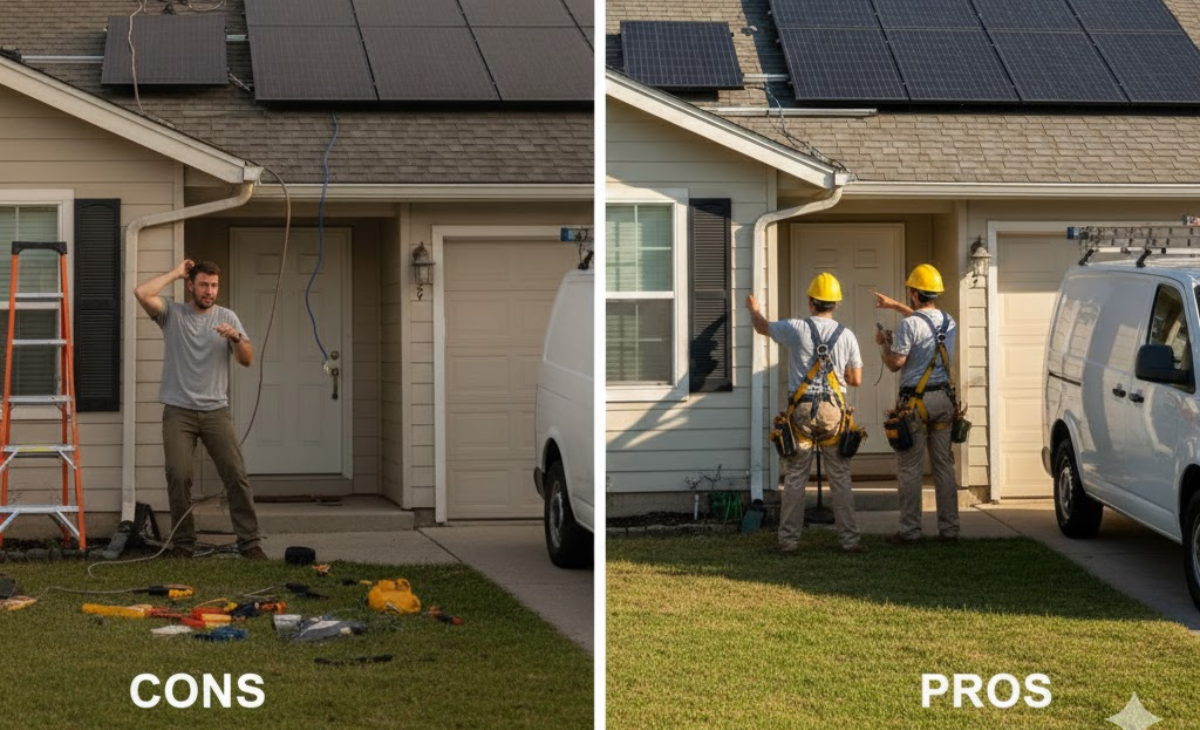
DIY solar energy savings solutions allow homeowners potentially to save on upfront costs by eliminating labor fees. Many enthusiasts are attracted to the idea of buying solar panel kits, mounting them, wiring the system, and feeling a deep sense of accomplishment when they power their homes.
On the other hand, professionals bring technical expertise, code compliance, and guarantee reliability. They handle permitting, inspections, and complex electrical work safely, reducing long-term risks. A professional installation tends to provide better system performance, warranties, and peace of mind. But, that expertise comes with higher upfront cost.
How Much Money Can Be Saved With DIY Setup?
One of the most compelling reasons to consider a DIY solar installation is cost savings. Without paying for labor, homeowners can reduce the total project cost significantly.
These savings are especially attractive for those who are comfortable managing a complex, technical project. For technically inclined homeowners, doing the work themselves means they own every piece of the system and understand how every component works.
However, it’s not just material costs: a DIYer must invest significant time in research, design, permitting, and construction. Mistakes can add hidden costs—such as rework, repair, or even replacing faulty wiring or mounting hardware.
What Are the Safety and Technical Risks of DIY Solar Installations?
Installing solar panels isn’t just a matter of screwing them into place. It involves roof work, electrical wiring (especially direct current, or DC), structural mounting, and strict compliance with building and electrical codes.
An incorrect wiring connection, poor grounding, or subpar mounting can lead to serious safety hazards—including fire, electrocution, or structural roof damage. Without the training and experience of certified installers, errors may compromise both safety and system performance.
Another challenge is navigating the permitting process. Many jurisdictions require electrical permits, building permits, and inspections for grid-tied systems. Professionals often handle all of that for the homeowner, whereas a DIYer must learn and manage local regulations themselves.
Moreover, some solar kit manufacturers or inverter companies may void equipment warranties if the system was not installed by a certified professional. That puts the entire long-term value of the system at risk if something goes wrong.
Why Professional Installation Often Yields Better Performance and Reliability
Choosing a professional installer brings deep technical expertise, and that has a significant impact on system design and long-term performance. Professionals use design software, assess shading, optimize panel orientation, and size inverters properly to maximize energy production.
Because of their experience, professional teams usually complete residential installs much faster—saving homeowners from months of labor. They also ensure compliance with local codes and inspections, reducing risk of failure or rework.
Perhaps most importantly, professional installs usually come with warranties. Installers often offer workmanship guarantees, and manufacturers provide product warranties when installed by certified professionals. That safeguard means that if something breaks or underperforms, the homeowner is not solely responsible for expensive repairs or replacements.
Finally, professional systems are more likely to operate at peak efficiency. Errors in panel placement, inverter configuration, or mounting can reduce a DIY system’s output by a measurable margin. Over the long lifespan of a solar array, that efficiency gap can translate to significantly lower savings.
What About Insurance, Permits, and Long-Term Liability?
Insurance companies may have stricter requirements for DIY installations. If a system isn’t installed according to code, or if it’s found to be noncompliant, homeowners may face challenges with homeowners’ insurance or liability. Some insurers only approve solar installations done by certified installers.
On the regulatory side, professional installers typically navigate permitting, interconnection applications, and code compliance. Because of the complexity, a DIYer could misunderstand local requirements, leading to permit rejections or dangerous installations.
Improper permitting or inspection can also jeopardize access to incentives or rebates, which often require documented compliance and certified installation. This risk undermines the financial appeal of DIY for some users.
What Role Does Experience and Skill Play in DIY vs Professional Solar?
DIY installation demands not just willingness, but real competence in construction, electrical wiring, and system design. Without that, the risk of costly mistakes increases sharply. Homeowners who are technically savvy and willing to learn may be able to pull off a high-quality DIY installation. Others may struggle.
Conversely, professional installers bring a track record: they’ve done numerous installations, understand common failure modes, and know how to prevent or correct them. Their experience reduces the chance of mistakes, increases system stability, and helps protect warranties.
A mixed strategy sometimes emerges: a homeowner might do some of the work (such as ordering components) but hire professionals for wiring, permitting, or final inspection. That hybrid model can reduce cost while preserving safety and compliance.
Why Long-Term System Performance Matters in Solar Energy Savings Solutions
For solar energy savings solutions to be financially effective, long-term performance is critical. A misaligned system, poor mounting, or incorrect electrical configuration can sap efficiency and reduce the return on investment.
Professionally designed systems are more likely to maximize the sun’s potential, reducing payback time and increasing overall lifetime energy yield. In contrast, a DIY system might underperform if suboptimal design choices or installation errors go unaddressed.
Maintenance and durability also factor in. Pro installers often provide guidance or service contracts, helping ensure that the system remains clean, secure, and functional for decades. A poorly installed system may require more repairs or fail earlier.
Balancing Cost Savings vs. Risk in DIY Solar Energy Savings Solutions
For many homeowners, the DIY option seems like a natural way to minimize upfront costs and take ownership of a renewable energy project. But that savings comes only if everything goes smoothly—and significant risk remains.
The biggest advantage of professional installation is risk mitigation. With experienced hands, code compliance, high-quality workmanship, and warranties, many of the unknowns of a solar project become manageable.
The DIY side offers control and potential cost reduction, but it demands careful planning, safety awareness, and technical competence.
How to Avoid Common Mistakes in DIY Solar Installations
If someone decides to take the DIY path, they should start with careful planning. They should evaluate their roof structure, get a structural assessment if needed, and ensure they fully understand the mounting system. They must perform a detailed shade analysis.
Next, they should secure all required permits and plan for inspection. Overlooking or misunderstanding building codes or electrical regulations can jeopardize safety, insurance, and system longevity.
Safety equipment (harnesses, fall protection, proper tools) is mandatory. DIY installers should not underestimate the dangers of working on a rooftop or handling high-voltage electrical wiring.
Finally, ongoing performance monitoring is key. Even a DIY system benefits from monitoring tools or energy management software that help the homeowner detect underperformance, wiring issues, or other faults.
For insights into typical mistakes and how to address them, homeowners can refer to Common Pitfalls in Solar Installation and How to Avoid Them, which outlines real-world lessons learned.
Comparison of DIY vs Professional Solar Installation
| Factor | DIY Installation | Professional Installation |
| Upfront Cost | Lower (material + parts) | Higher (labor + services) |
| Technical Risk | High risk (wiring, placement) | Moderate (expert handling) |
| Safety | Safety burden on homeowner | Safety managed by trained team |
| Permitting & Inspection | Homeowner handles all paperwork | Installer handles permits, inspections |
| Warranties | May void panel or inverter warranties | Full manufacturer and workmanship warranties |
| Long-Term Performance | Dependent on homeowner skill | Optimized by design and experience |
| Time to Installation | Weeks to months | Often days for installation (excluding permitting) |
Five Frequently Asked Questions (FAQs)
Q1: Does doing a DIY solar installation affect my eligibility for financial incentives?
It might. Some incentives or tax credits require certified installers or proof of code compliance. Failure to meet these conditions could reduce or eliminate these benefits.
Q2: Will I void my solar panel warranty if I install them myself?
Possibly. Many manufacturers require certified or professional installation to maintain warranty coverage. DIY installation can nullify parts of or the entire warranty.
Q3: How much time does a DIY solar installation take compared to a professional install?
A DIY project can take weeks or even months when factoring in research, permitting, mounting, and wiring. A professional installer often completes the physical installation in just a few days.
Q4: Is there a higher risk of fire or electrical issues with DIY solar systems?
Yes. Without correct wiring, grounding, or structural installation, there’s elevated risk of electrical faults, short circuits, or other safety hazards.
Q5: Can I insure a DIY solar installation?
Insurance may become more complicated. Some insurers require professional installation or proof of certification. DIY installs may also lead to higher liability in case of failure or damage.
Conclusion
In the debate between DIY solar installations vs professional setup, neither path is inherently superior for everyone. DIY appeals to technically skilled, hands‑on homeowners willing to take on risk, invest time, and manage the entire project from start to finish. Professional installation, meanwhile, brings expertise, code compliance, safety, and strong long-term warranties.
When evaluating solar energy savings solutions, homeowners should carefully consider their goals: whether they prioritize upfront cost savings, long-term reliability, or seamless design and permitting. For those uncertain about their ability to safely and effectively self-install, hiring a professional may provide better value over the system’s lifetime.
Guardian Home Energy supports both types of customers by offering design advice, performance monitoring, and expert guidance — helping homeowners choose the right path for their solar journey, whether they go DIY or work with a certified installer.